When it comes to your home’s electrical system, safety should always come first. Most homeowners are familiar with the breakers in their electrical panel, but fewer know what GFCI protection is, or why you need both. Let’s break down what each device does, how they protect you, and where the code requires them.
Standard Breakers: The Basics
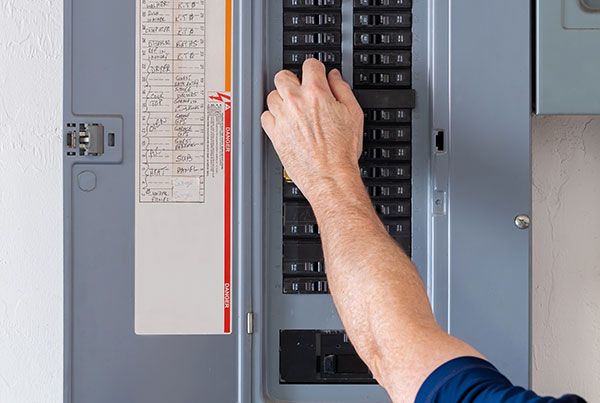
Your circuit breakers are the first line of defense against electrical problems. Their job is to protect your home’s wiring and prevent fire hazards.
- Overload protection – If too many devices are plugged into one circuit, the breaker trips before the wires overheat.
- Short circuit protection – If “hot” wires touch “neutral” wires and LOTS of power flows, the breaker trips instantly to stop sparks and overheating of the wires.
- Ground-fault protection – If “hot” wires touch “ground” wires and LOTS of power flows, the breaker trips instantly to stop sparks and overheating of the wires.
Think of a breaker as your home’s “traffic cop.” It makes sure no circuit is asked to handle more than it safely can.
GFCI Protection: A Different Kind of Safety
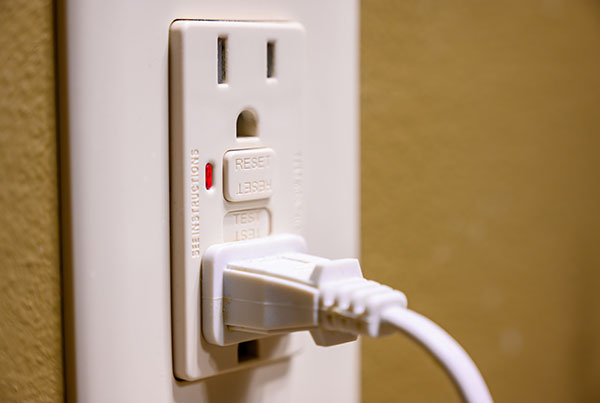
GFCI stands for Ground Fault Circuit Interrupter. While standard breakers protect your home and wiring, GFCIs are designed to protect you.
Here’s how they work:
- A GFCI constantly monitors the flow of electricity.
- If even a TINY amount (as little as 4–6 milliamps) of current leaks out of the normal path, for example, through water or through your body, it shuts off power instantly.
- This happens in fractions of a second, fast enough to prevent severe shock or electrocution.
That’s why GFCIs are required in bathrooms, kitchens, garages, laundry areas, basements, and outdoor spaces, anywhere electricity and water might mix.
GFCI Breakers: The Combo Approach
A GFCI breaker combines both protections, overload/short circuit and ground fault into one device.
- It installs right in your panel, just like a standard breaker.
- One GFCI breaker can protect every outlet on that circuit.
- You don’t necessarily need GFCI outlets downstream if the breaker is providing protection (though sometimes both are used).
This makes them especially handy for circuits with multiple outlets, like garages or unfinished basements.
Why do people remove such a vital safety feature?
Have you ever seen a kitchen that didn’t have GFCI outlets? There’s a chance that they used to be there and were removed. Why, you might ask? Probably because they were “nuisance” tripping. What causes a nuisance trip? Either an appliance has an issue that the GFCI device sees as a fault, or there are “neutral” and “ground” wires touching somewhere, likely the latter.
If you recall from earlier, normal breakers don’t trip from “neutral” and “ground” wires touching. If neutral and ground wires touch, the power being used “down stream” has multiple paths back to take, which causes the GFCI to trip.
Should you remove the GFCI if it “nuisance trips”? NO! Correct the issue that is causing it to trip and keep your life saving protection in place.
Where the Code Requires GFCI
The National Electrical Code (NEC) has steadily expanded GFCI requirements to keep people safe. As of recent code updates, GFCI protection is required in homes in the following areas:
- Bathrooms
- Kitchens (all countertop receptacles)
- Garages (ALL outlets, including ceiling outlets. Cord reels are a real thing, pun intended)
- Crawlspaces
- Unfinished AND finished basements (water doesn’t care if there’s carpet)
- Laundry areas
- Outdoors
- Within 6 feet of sinks, bathtubs, or showers
Your local code may vary depending on what version of the NEC your city or county has adopted, but as a rule of thumb: if water is nearby, you’ll need GFCI protection.
What Does GFCI Protection Cost?
It depends on whether you’re installing outlets or breakers:
GFCI outlets
Professionally installed: $100–$475 per outlet, depending on wiring access, size of job, and if there is wiring in place already.
GFCI breakers
Professionally installed: $175–$1000 per breaker, depending on your panel type, size of job, if it has extra features, and the circuit voltage.
If your panel is older or doesn’t have much room, there may be extra costs for compatibility or upgrades.
The Bottom Line
- Standard breakers protect your home and wiring from overloads and fire hazards.
- GFCIs protect people from dangerous electrical shock.
- GFCI breakers give you both protections in one device.
If you’re unsure whether your home is up to code, or if your breakers or outlets are tripping often, it’s worth having a licensed electrician take a look. A small upgrade today could make a major difference in safety tomorrow.


