If you’ve ever been told you “need a panel upgrade” or “should consider a service upgrade,” it can sound like the same thing, but they’re actually different parts of your electrical system. Both are important for keeping your home safe and ready for modern electrical loads. Here’s what each one means and how to know which your home might need.
The Electrical Panel: Your Home’s Nerve Center
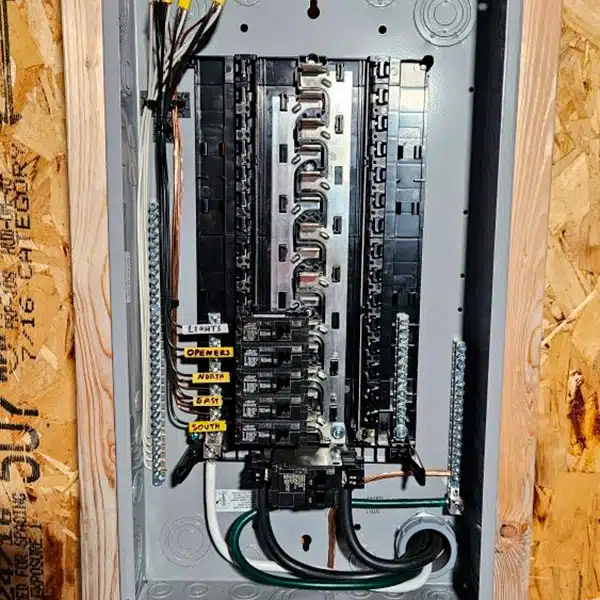
Your electrical panel (sometimes called a breaker box) is the central hub that distributes power throughout your home. It’s where electricity from the utility company is divided into circuits that feed your lights, outlets, and appliances.
Over time, panels can become outdated or overloaded, especially if your home was built before today’s high-energy demands.
A panel upgrade means:
- Replacing your existing breaker box with a new, higher-capacity panel
- Adding or replacing breakers
- Tidying up and labeling circuits for safety and organization
Panel upgrades are typically needed when:
- You’ve run out of space for new circuits
- Breakers are constantly tripping
- You’re installing power-hungry equipment (like EV chargers, hot tubs, or workshops)
- Your current panel is outdated or a safety hazard (like old fuse boxes or Federal Pacific/Zinsco brands)
Most modern homes are upgraded to 200 amps, though some smaller homes do fine with 100 amps and larger properties or shops may need 400 amps.
The Electrical Service: How Power Enters Your Home
Your electrical service includes everything that brings power to your home from the utility lines, not just the panel. This usually includes:
- The service mast or conduit (outside your home)
- The meter socket (where the utility measures usage)
- The service entrance cables
- The grounding system
- The panel itself
A service upgrade involves increasing the amount of power your home receives from the utility company. It’s a bigger project that often includes both exterior and interior work.
A service upgrade may include:
- Increasing your electrical capacity (for example, from 100 amps to 200 amps)
- Replacing the meter socket, service mast, and wires from the weatherhead
- Coordinating with your power company to handle reconnection and inspections
Because this involves utility coordination and sometimes city inspections, service upgrades take more planning and are generally more expensive than panel-only upgrades.
In Short
Upgrade Type Focuses On:
| Panel Upgrade | Inside your home |
| Service Upgrade | Both inside and outside |
What It Involves
| Panel Upgrade | Replacing or adding breakers, new panel, reorganizing circuits |
| Service Upgrade | New meter socket, wiring, mast, grounding, coordination with utility |
Typical Cost (MN Range)
| Panel Upgrade | $2,000–$6,500 |
| Service Upgrade | $8,500+ |
How to Know Which You Need
- If your breakers trip often, your panel is full, or you’re adding new high-load equipment → Panel upgrade may be enough.
- If your panel is small and your service size (amperage) is too low for your total electrical load → Service upgrade is the right move.
- If you’re unsure, an electrician can check your panel’s capacity, inspect your service entrance, and explain what your home actually needs — no guesswork.
The Bottom Line
Think of it this way:
- A panel upgrade is like replacing your home’s electrical “distribution box.”
- A service upgrade is like replacing the main “pipeline” that feeds it, along with the panel inside and the grounding system.
If your home struggles to keep up with your electrical needs; or you’re planning a remodel, EV charger, or addition, it’s worth getting a professional assessment.
At Great Northern Electric, we walk you through your options clearly, explain what each upgrade includes, and make sure your home is safe, reliable, and ready for whatever you plug in next.


